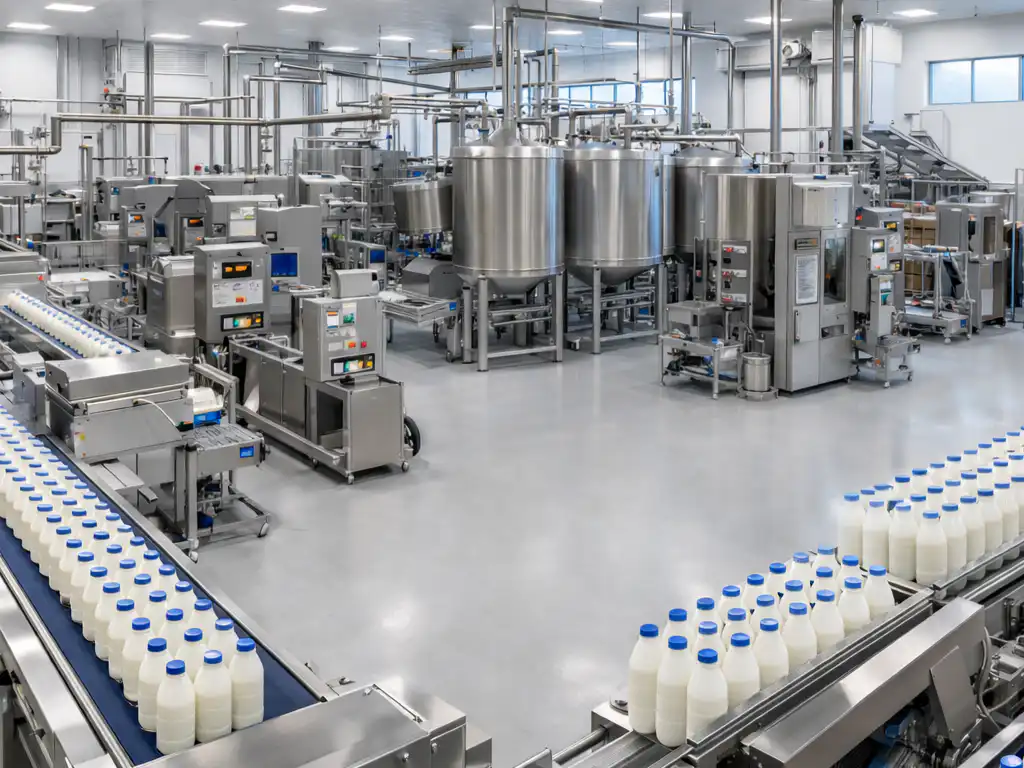
In the food industry, gaskets are often an overlooked technical component, yet they play a crucial role in ensuring product safety and maintaining process continuity. An incorrect selection can lead to contamination, fluid leaks, plant downtime, or non-compliance during audits and regulatory inspections.
The selection of food-grade gaskets must therefore be approached with a structured technical method, taking into account not only the material itself but also the actual operating conditions of the plant.
Using materials that are not suitable for food contact
One of the most common mistakes is the use of non-certified materials or materials that are not truly suitable for direct contact with food and beverages. Not all sealing materials are designed for hygienically critical environments: some may degrade over time, release unwanted substances, or lose their mechanical properties.
For this reason, it is essential to verify that the material is chemically inert, stable over time, and compliant with relevant regulations such as FDA, MOCA, and Regulation (EC) No. 1935/2004. Materials such as PTFE, GYLON®, or certified food-grade elastomers represent reliable solutions due to their chemical compatibility and long-term stability.
Ignoring temperature, pressure, and real operating conditions
Another common mistake in selecting food-grade gaskets is evaluating the material solely based on fluid compatibility, while neglecting temperature, pressure, and thermal cycling.
A gasket may theoretically be suitable for food contact but become inadequate if exposed to incompatible operating conditions. PTFE, for example, offers excellent chemical inertness, but without proper support it may not be suitable for high-pressure applications. Similarly, some elastomers may deform or lose elasticity when continuously exposed to high-temperature steam.
Accurately analyzing minimum and maximum temperature, operating pressure, and the frequency of thermal cycles is essential to prevent premature failures and leakage.
Underestimating the impact of CIP and SIP cleaning cycles
In food processing plants, gaskets are regularly exposed to cleaning and sanitation cycles, often involving aggressive detergents and high-temperature steam. This factor is sometimes underestimated, yet it can significantly reduce sealing performance over time.
Certain materials tend to swell, harden, or become porous after repeated CIP/SIP cycles. Solutions such as expanded PTFE provide greater stability due to their high chemical inertness. Hybrid configurations, such as gaskets with an elastomer core and PTFE coating, can combine elasticity and chemical resistance in low-pressure applications.
Not considering flange geometry and surface finish
Gasket performance does not depend solely on the material, but also on the interaction with the sealing surfaces. Worn, scratched, or irregular flanges can compromise sealing performance even when the material itself is suitable.
Using gaskets that are too thin or insufficiently resilient on non-perfectly planar surfaces increases the risk of leakage. In such cases, it is advisable to evaluate materials with greater conformability or consider custom-shaped solutions, particularly in non-standard plants or complex geometries.
Using generic gaskets without regulatory verification
In the food industry, traceability is an essential requirement. Using generic gaskets without technical documentation or declarations of conformity exposes the company to significant risks during audits, quality inspections, or certification processes.
Each supply should be accompanied by detailed technical data sheets, MOCA or FDA declarations of conformity, and clear information about material composition. For critical applications, requesting technical support to validate the selected solution is strongly recommended.
How to improve the selection of food-grade gaskets
To avoid these mistakes, a methodical approach is required. Gasket selection should begin with an analysis of the process fluid, operating temperatures and pressures, installation methods, and maintenance requirements.
Evaluating the chemical and mechanical compatibility of materials, always requesting certified food-grade products, and considering customized solutions for non-standard plants help reduce the risk of leakage, contamination, and downtime.
Proper selection of food-grade gaskets is not merely a technical matter, but an investment in reliability, safety, and production continuity.
FAQ – selection of food-grade gaskets
-
Why is it so important to correctly select food-grade gaskets?
The selection of food-grade gaskets directly affects product safety, process continuity, and regulatory compliance. An unsuitable gasket can cause contamination, fluid leakage, or non-compliance during audits and quality inspections. -
Which materials are suitable for gaskets in contact with food?
Materials must be chemically inert, stable over time, and compliant with current regulations. The most commonly used include PTFE, expanded PTFE, GYLON®, and certified food-grade elastomers. Compliance with standards such as FDA, MOCA, and Regulation (EC) No. 1935/2004 should always be verified. -
Do food-grade gaskets need to withstand CIP and SIP cycles?
Yes. In food plants, gaskets are subjected to frequent cleaning and sanitation cycles involving aggressive detergents and high-temperature steam. The material must maintain elasticity, dimensional stability, and sealing performance even after numerous CIP/SIP cycles. -
How do temperature and pressure influence the selection of food-grade gaskets?
Operating temperature and pressure are critical parameters. A gasket may be suitable for food contact but not for extreme operating conditions. Minimum and maximum temperatures, operating pressure, and thermal cycles must be evaluated to prevent deformation or premature failure. -
Does flange geometry affect sealing performance?
Yes. Surface finish and the condition of the mating flanges significantly influence gasket performance. Worn or irregular flanges may require materials with higher conformability or custom-shaped solutions to ensure proper load distribution. -
Is it mandatory to request certifications for food-grade gaskets?
In the food industry, traceability is essential. Each gasket should be supplied with a technical data sheet and declarations of conformity (MOCA, FDA). Missing documentation may create issues during audits or regulatory inspections. -
When is a custom food-grade gasket recommended?
Custom gaskets are advisable in non-standard plants, in the presence of particular flange geometries, or in critical applications. A tailored solution improves sealing performance, reduces leakage risks, and increases service life.