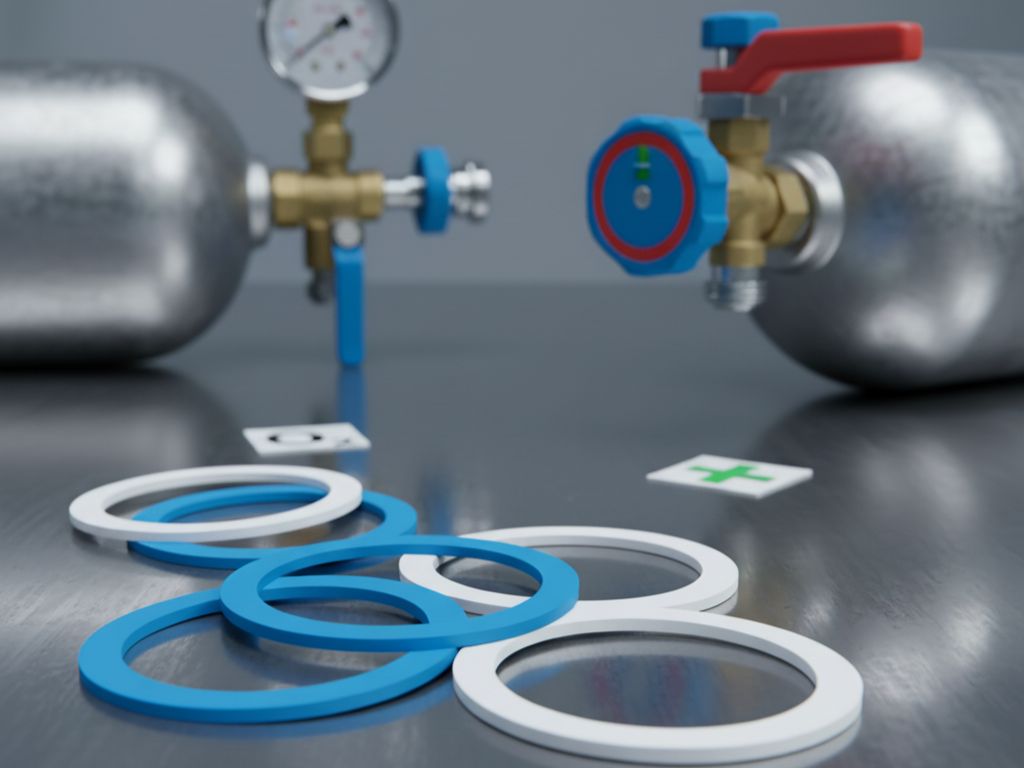
Oxygen gaskets play a critical role in industrial systems handling high-purity gases. Their cleanliness is not a mere maintenance detail but an essential requirement to ensure operational safety, production continuity, and regulatory compliance.
Although not flammable, oxygen is a powerful oxidizer. Even minimal contamination from oils, greases, or residues can trigger ignition. For this reason, the cleaning of gaskets and packings used in oxygen service must follow strict, controlled, and well-documented procedures.
With over 60 years of experience, General Packing Italy is a trusted leader in the manufacturing of high-performance industrial gaskets, including those for high-oxygen environments.
The Risks of contamination in oxygen systems
In oxygen-rich atmospheres, many otherwise stable substances become highly combustible. Residues from poor maintenance, solid particles such as dust or fibers, or contamination from inappropriate cleaning agents are the main safety threats.
Even trace amounts of these contaminants can severely impair sealing performance, shorten gasket lifespan, cause unplanned shutdowns, and, in the worst cases, ignite fires.
Oxygen gasket cleaning: key phases
The cleaning process for oxygen gaskets depends on several factors, such as gas purity, operating conditions, and material compatibility. It is crucial to use residue-free, non-flammable cleaning agents that are fully compatible with the gasket materials. For instance, Euroseal® expanded graphite products must maintain their structural integrity to preserve mechanical and thermal performance.
After cleaning, a thorough inspection follows, either visual or instrument-based, to detect even the smallest traces of contamination, tailored to the specific requirements of the application: medical, petrochemical, steelmaking, or other critical industries.
The final phase is packaging. Gaskets must be individually packed in suitable, neutral materials and clearly labeled “Cleaned for Oxygen Service.”
Although GPI has adopted a plastic-free policy, it still uses sealed plastic bags under strict control when necessary to avoid any possible contamination.
Regulatory standards: a fragmented framework
Various international standards define acceptable contamination levels for components used in oxygen service. However, there is no universally recognized cleaning method. The most commonly referenced standards include ISO 15001, ASTM G93, and CGA (Compressed Gas Association) guidelines.
In the absence of a global protocol, the current best practice is the implementation of documented and repeatable internal processes that ensure traceability, compliance, and safety.
General Packing Italy’s commitment
In this context, gasket manufacturers have a crucial responsibility: to develop and maintain inspection and cleaning methodologies that meet the most demanding application requirements.
General Packing Italy delivers reliable solutions through a fully traceable production chain, certified materials, and decades of technical expertise.
The range includes graphite gaskets, GYLON®, metal-jacketed gaskets, spiral-wound gaskets, and packings specifically tested for oxygen-rich environments.
Each product is accompanied by internal quality checks, secure packaging, and continuous technical support to ensure maximum reliability under critical operating conditions.
Towards a shared approach to industrial cleanliness
Oxygen gasket cleaning is not just a safety practice—it is a strategic element for sustainable plant operation. In the absence of uniform regulations, active collaboration between manufacturers, regulatory bodies, and end users is essential to define shared standards.
General Packing Italy continues to invest in research, innovation and sustainability to offer cutting-edge, reliable solutions that meet the highest safety requirements.