
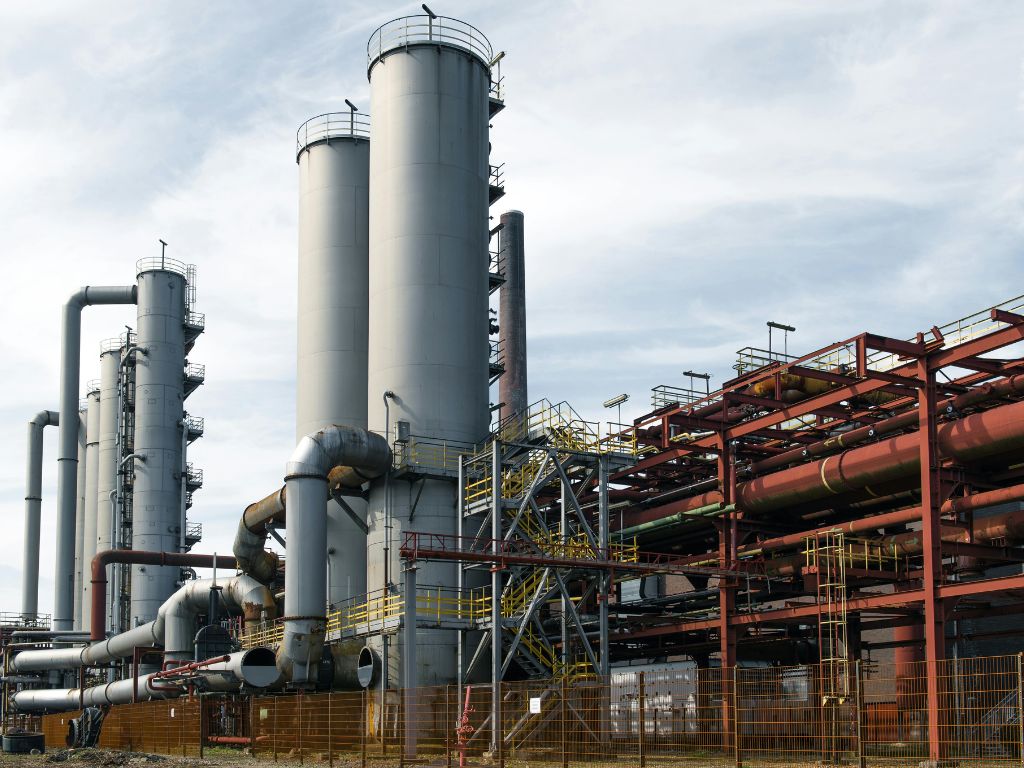
In the energy sector, managing fugitive emissions is one of the main operational challenges to ensure safety, reliability, and regulatory compliance. Plants that handle natural gas and hydrogen are particularly exposed to continuous pressure and temperature cycles, which put traditional sealing systems to the test.
General Packing Italy was involved in an application case at an energy facility specialized in the treatment of liquefied natural gas, with the specific request to drastically reduce fugitive emissions detected during monitoring phases.
Critical issues in managing fugitive emissions
The client was initially using standard spiral wound gaskets with double ring and graphite filler. However, these solutions failed to ensure the required sealing performance, especially under operating fluctuations between 45 and 80 bar and temperatures up to 97 °C.
The failure to contain emissions compromised compliance with the environmental and safety parameters required by VDI 2440 and API standards.
Why standard gaskets failed
Traditional spiral wound gaskets are designed to ensure good sealing under load, but they often fail to adapt to the extreme thermal and mechanical stresses typical of processes involving natural gas and hydrogen.
Moreover, in environments subject to vibrations, thermal cycles, and variable operating conditions, the risk of buckling (spiral instability inward) can compromise the integrity of the seal, facilitating gas leakage.
The solution: Euroseal® Double Seal G
General Packing proposed an advanced solution: the Euroseal® Double Seal G gasket, a high-performance spiral wound gasket with double sealing action. Unlike standard configurations, this gasket includes an inner ring machined as a camprofile and covered with Euroseal® graphite. This element not only contains the media but acts as a primary seal, protecting both the spiral and the flanges from direct attack.
Thanks to its robustness and ability to adapt to load variations, the Euroseal® Double Seal G proved ideal for high-criticality applications, helping to reduce leakage and enhance operational safety.
Results achieved: performance and certifications
The adoption of the Euroseal® Double Seal G led to a drastic reduction in fugitive emissions. Field tests confirmed full compliance with the VDI 2440 and API 6FB (Fire Safe certification) requirements.
The gasket maintained its integrity even under thermal and pressure stress, improving the overall plant efficiency and reducing downtime.
Conclusions: efficiency, reliability, and sustainability
This application case confirms that the Euroseal® Double Seal G gasket stands out for its reliability under extreme operating conditions, representing the ideal solution for energy plants requiring high-performance, long-lasting, and environmentally compliant seals.

